
Creators and Social Marketing
A Story of Design Leadership in Amazon’s Creator Ecosystem
From Silos to Ecosystem: Leading the Creator Space
In 2022, Amazon made one of its biggest strategic bets in years: adding an icon to the main bottom navigation dedicated entirely to "social shopping." I was brought in to lead the design team for this new frontier. The mission was high-stakes: help influencers monetize their passions and inspire a new generation of Gen Z customers.
However, behind that new nav icon wasn’t a unified product; it was a fragmented ecosystem of 14+ independent programs, each with its own goals and platforms. Creators didn't see "separate programs"—they just saw confusion. My challenge was to transform this collection of tools into a singular, world-class experience while moving my team from feature-execution to platform-leadership.
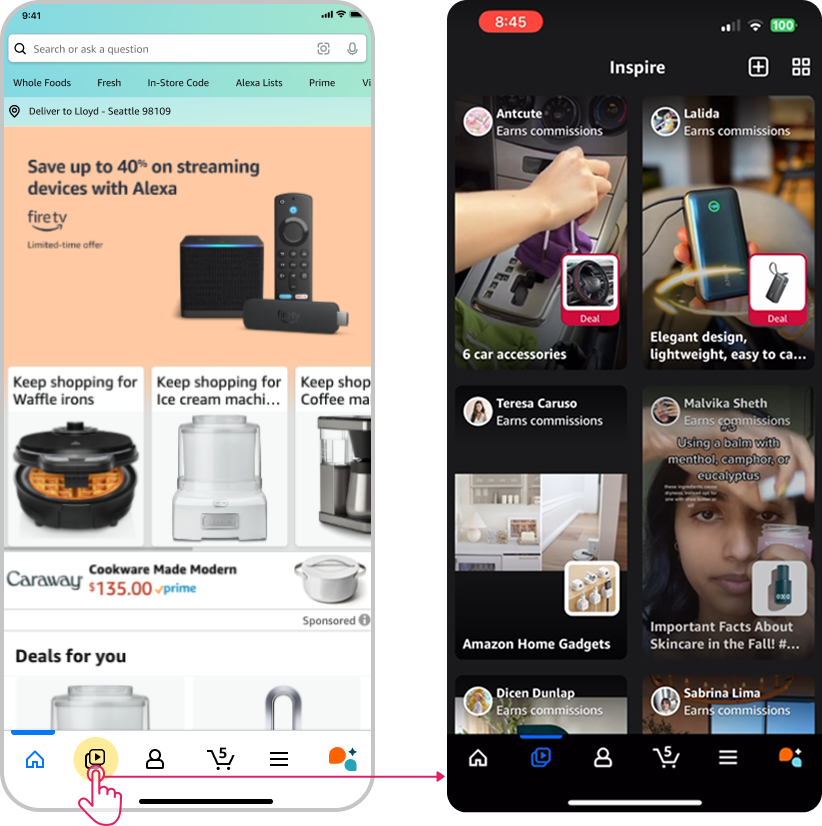
Breaking Silos with "Walk the Store"
I knew a redesign wouldn't fix the underlying culture, so I started by getting everyone into the same room, literally. I initiated "Walk the Store" sessions where PMs, engineers, and designers had to step into a creator’s shoes and try to complete tasks using another team’s tools. Watching the friction in real-time changed everything; the problem stopped belonging to one team and started belonging to all of us.
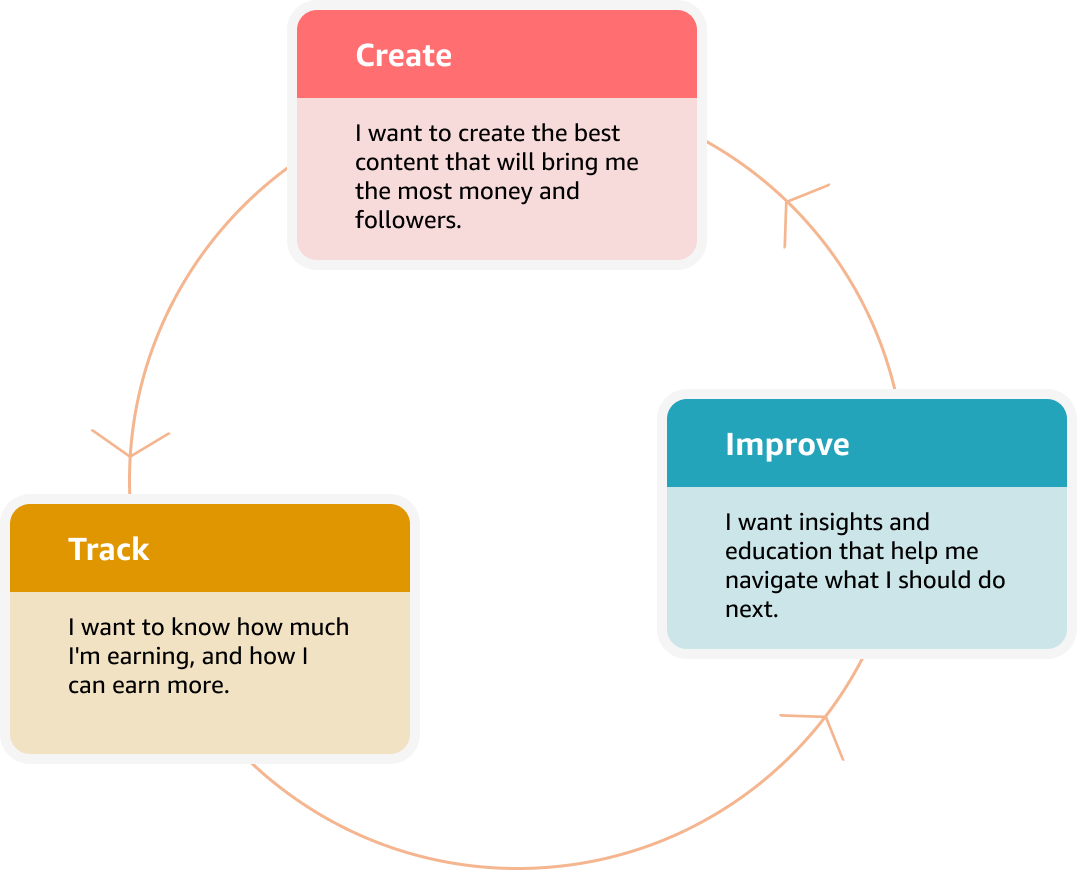
To align everyone, I partnered with Product to map the journey into a continuous loop: Create → Track → Learn → Improve. This map became our North Star, leading to the Creator Hub, a personalized "home base" that finally gave creators a single, clear view of their business.
Coaching Leaders, Not Just Designers
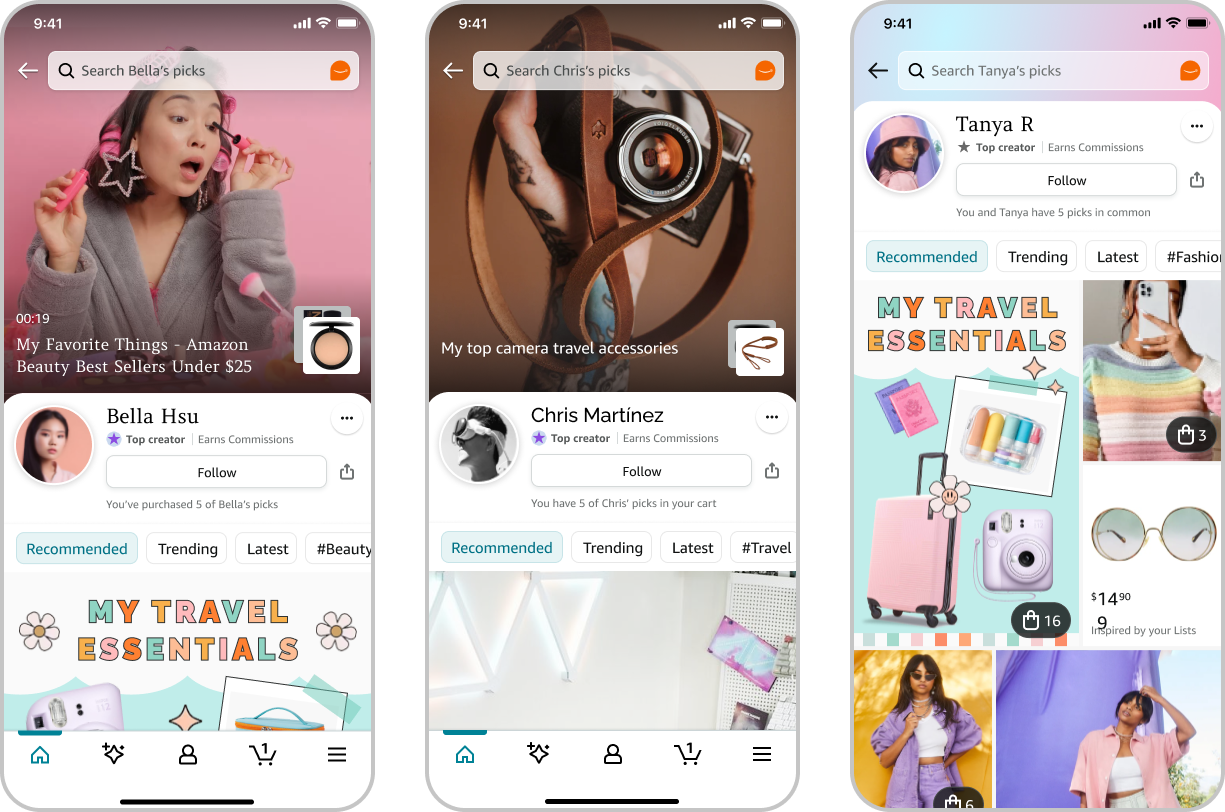
When it came time to tackle Storefronts, I saw it as the perfect opportunity to let my team lead. I tapped one of my designers, Beatrice, to push beyond Amazon’s standard transactional patterns. We needed to find a way to balance "commerce" with "identity." I coached her as she took our vision on a "leadership roadshow," helping her navigate the high-level stakeholders and turn a risky idea into an aligned strategy.
Turning Data into Emotion
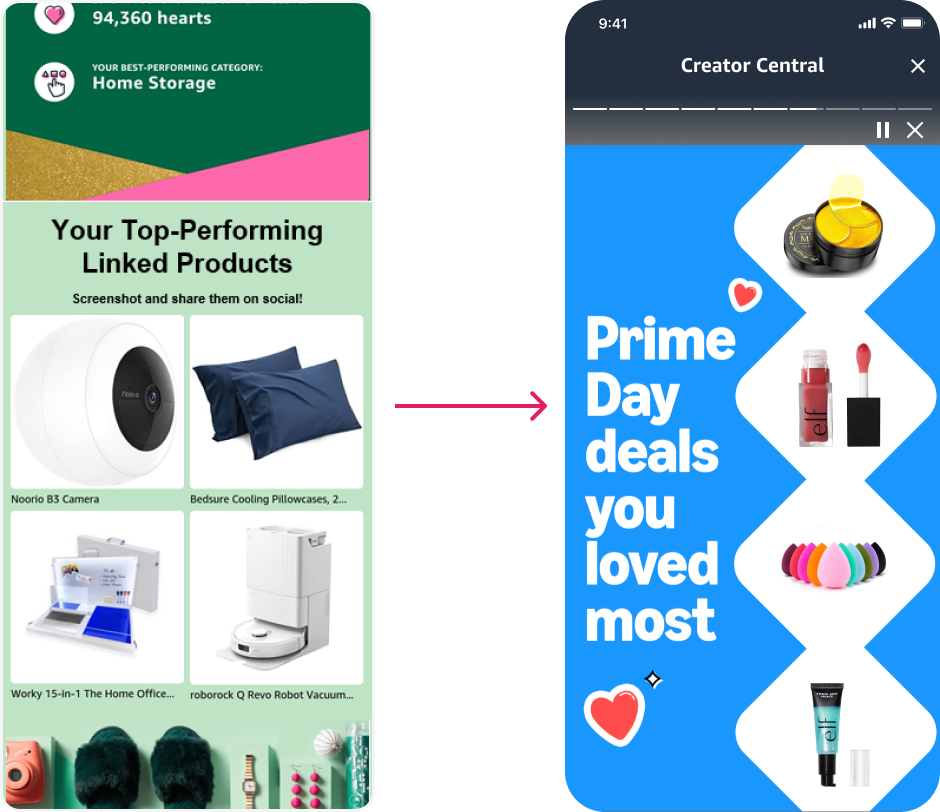
There were also moments where the team was at capacity and I needed to jump in to unblock a massive pain point. Creators were drowning in data scattered across seven different reporting tools, making it impossible to see the big picture. I stepped in to set a new direction: we stopped looking at raw numbers and pivoted to a mobile-first, narrative-driven approach.
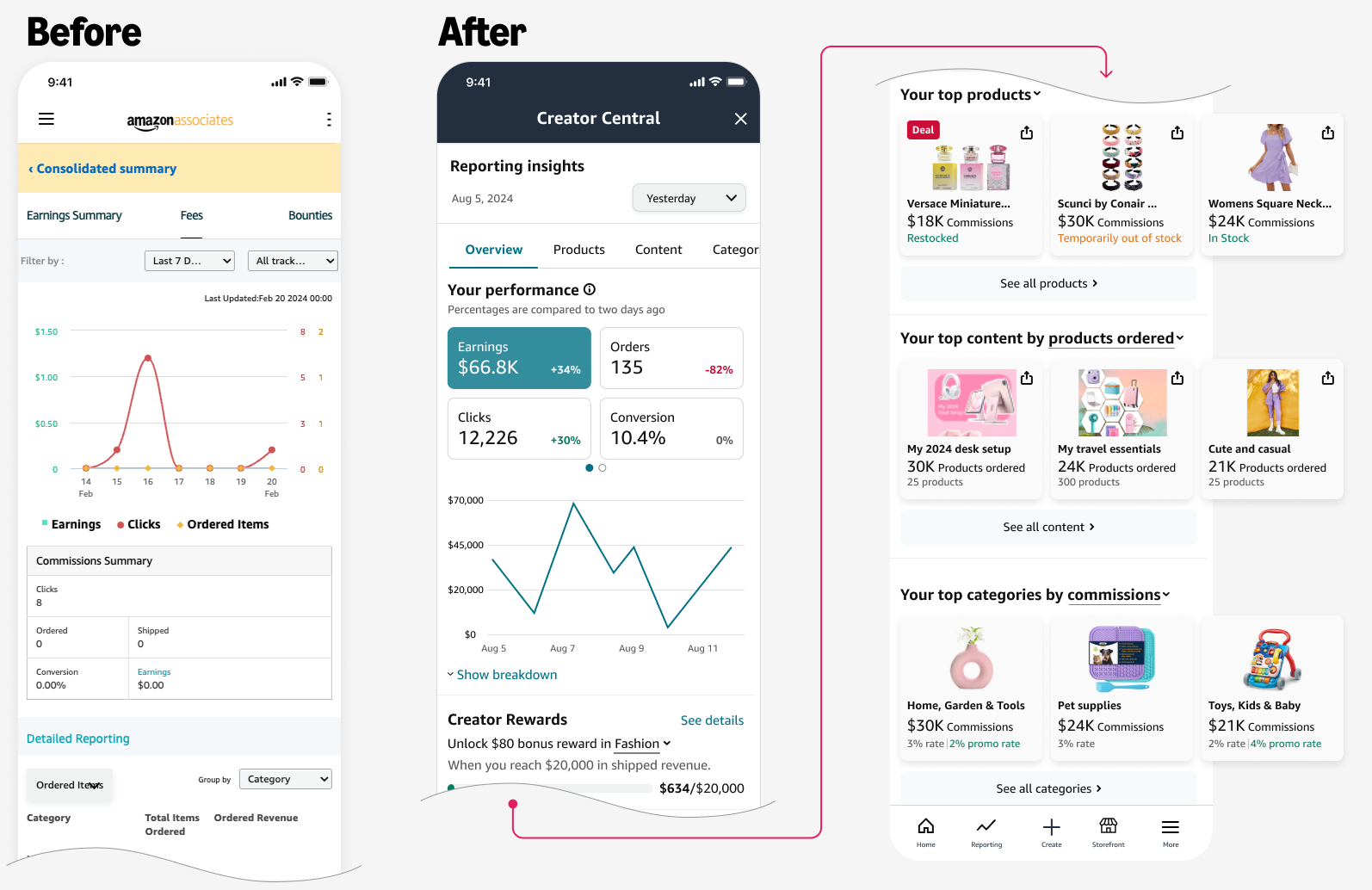
We transformed raw numbers into a "Creator Rewind" story. This wasn't just a dashboard; it was a narrative of their year.
The result: Our 2024 Prime Day launch saw a 13% increase in creator sharing, turning dry performance data into a high-performing marketing engine.
Scaling Innovation through AI
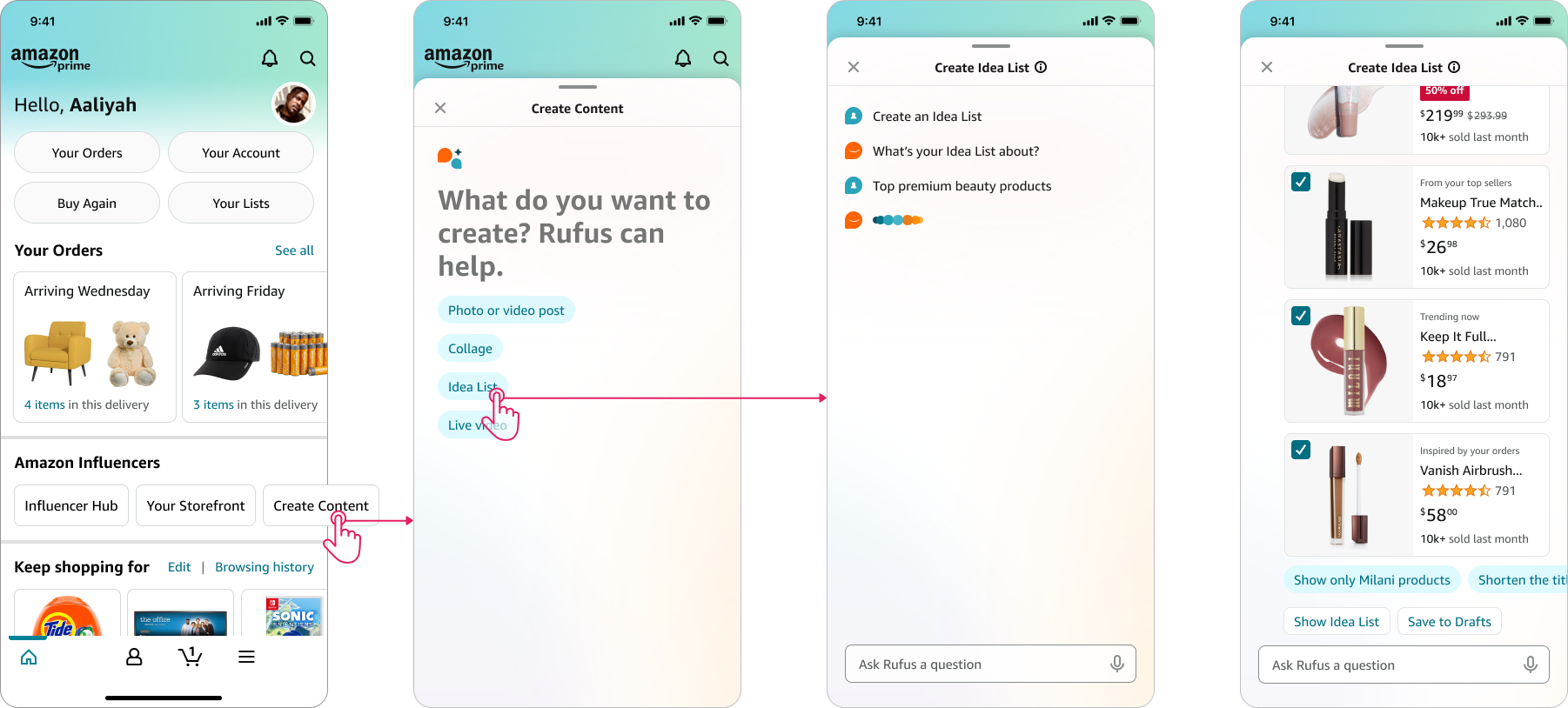
The most "mechanical" friction we found was in content creation. I empowered another lead designer, Lai, to head a "tiger team" focused on AI-driven workflows. Together, we reframed AI not as an opaque tool, but as a creative partner that could generate titles and structures at scale.
By giving Lai full ownership, she didn't just design a feature; she became the guiding voice for AI-assisted tools across the broader Amazon organization.
The Impact
By moving from fragmented tools to a cohesive platform, we didn't just improve metrics—we shifted the culture.
Creator Hub provided the structure.
Storefronts provided the identity.
AI provided the speed.